Caution: Warning Signs of Lantern Flies
Spotted lanternflies have become a major threat to trees across Pennsylvania. Early detection is key to protecting your trees, and knowing when the damage crosses into disease and calls for spraying is the next thing to learn. Send us a photo if you're not sure what you're looking at.
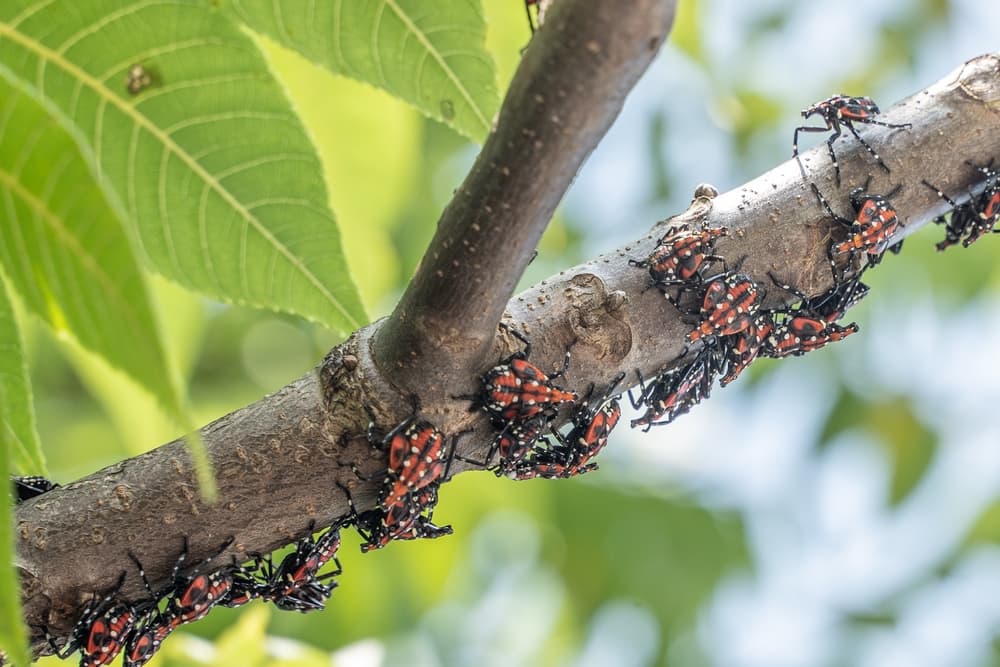
In spring, look for nymph-stage lanternflies. Young nymphs are small and black with white spots, developing red patches as they mature, and they tend to congregate in large numbers on tree trunks and branches. That's part of why reducing insect activity in your backyard starts with catching them this early. Properties around Spring Grove report heavy nymph activity by late April.
Adult lanternflies show up in late summer with distinctive spotted wings. They're strong jumpers and startle easily into flight when approached, so check tree trunks, especially tree of heaven, with a tree trimming crew who knows where they cluster.
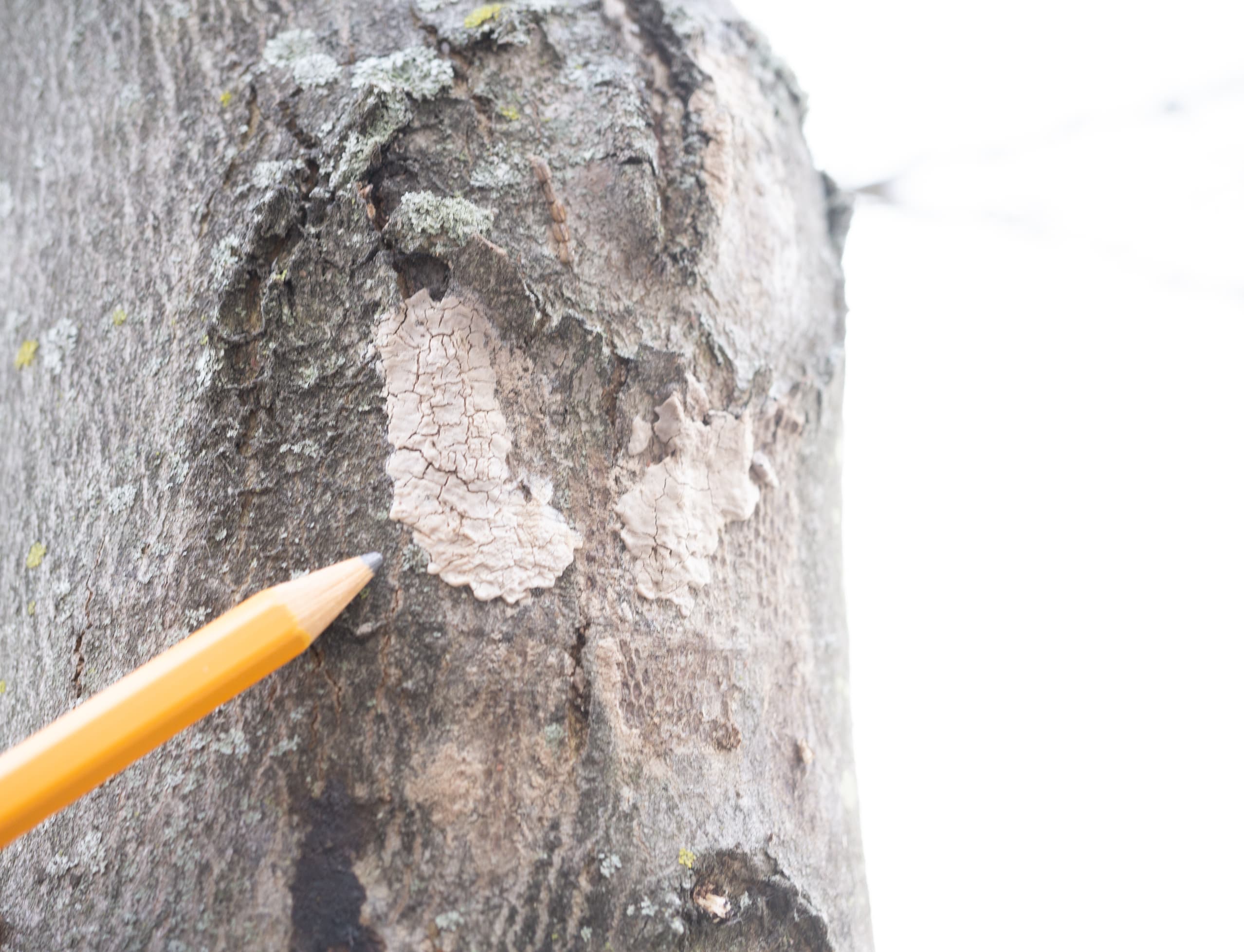
Egg masses appear in fall and winter as grayish-brown patches on trees, rocks, outdoor furniture, and vehicles, with each mass holding 30 to 50 eggs. Scraping and destroying them is an important control measure, and it's the focus of our fall lanternfly nest treatment, paired with a spring round of tree spraying to close the loop on the whole life cycle.