Signs of Tree Disease from Lanternflies: When to Spray
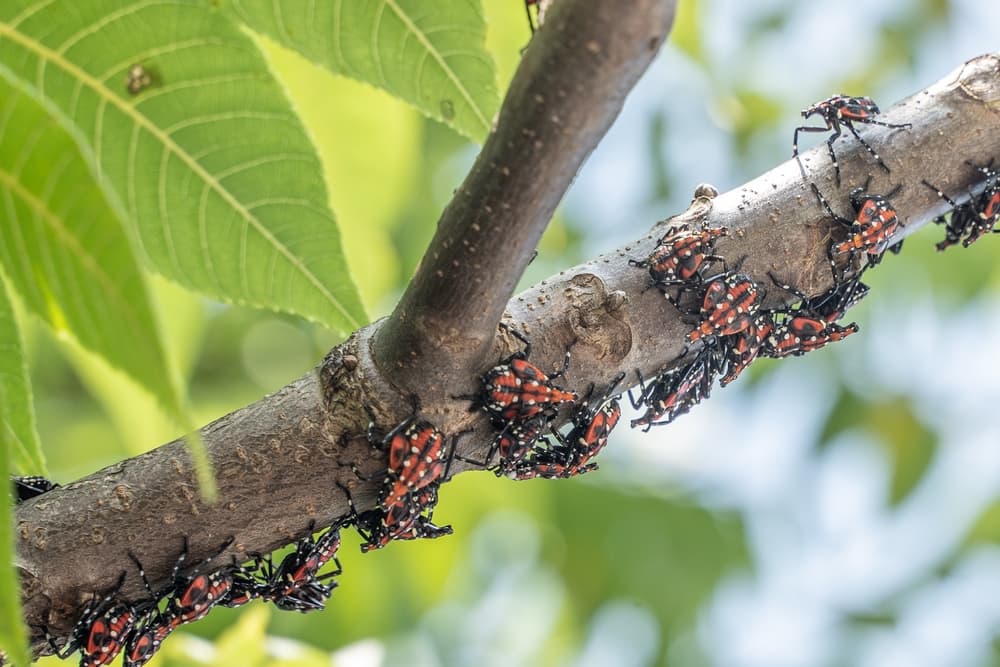
Spotted lanternflies feed on tree sap, weakening the tree and leaving it vulnerable to secondary infections. Knowing the signs early, and knowing which trees lanternflies target first, helps you act before significant harm is done. Our team can take a look if you're not sure what you're seeing.
Look for weeping wounds on tree trunks that ooze sap. Lanternflies create feeding sites that leak a sticky substance called honeydew, which coats surfaces below the tree. That's one of the warning signs of lantern flies worth checking for on a regular walk around the yard. Properties in Dallastown see this most on tree of heaven.
Sooty mold, a black fungus that grows on honeydew deposits, is another telltale sign. If you see black, sooty patches on bark, leaves, or surfaces beneath the tree, lanternflies may already be present, and a broader lawn care visit can catch what's spreading at ground level too.
The best window to spray is during the nymph stages, spring through early summer, and again once adults appear from late summer through fall. This lines up with the egg-mass treatment done every fall, and pairs with properly timed tree spraying rather than a one-time visit.